Saturday, May 9, 2009

TC: The Damned United


The Damned United 25


What I liked about this film was the culture-historical period detail. That is, what I liked was the fairly uncompromising commitment to telling a story accurately, without the stooping into explanatory obviousness that is normally de rigeur when telling a story about historical events in what remains, after all, a culturally particularized/insular as well as literally (as Gertrude Stein insisted) an island nation, England, for an American audience.

That lack of stooping came as something of a surprise, as writer Peter Morgan's preceding two Great Hits, The Queen and Frost/Nixon, went over so well on these shores.

This time however his story, adapted from a David Peace novel, is not a transatlantic readymade; in fact, it's the opposite, a transatlantic conundrum. Americans likely just won't get it. I mean, faced with the illegible mélange of cultural signals contained in terms like "Derby County" and "Brighton and Hove Albion," who's got the time? To, like figure out the meaning?

At the screener preview I saw, before the lights went down, someone commented/boasted, "I don't know anything about English football--what shape is the ball?"

Anthony Quinn, writing in the Independent, captures what's good about The Damned United: the historical specificity.

This film transported me right back to the Saturday-night television of my childhood. It majestically conjures that Match of the Day era of kipper ties, bouffant hair, sheepskin coats, Jimmy Hill's beard, orange footballs, and pitches that looked like the battlefields of Flanders. Yet it also brings to mind another 1970s favourite of Saturday nights on the Beeb: come on, don't say you've forgotten Mike Yarwood's impressions. In among his Jimmy Saviles, Harold Wilsons and Bob Monkhouses there would usually be a skit on Brian Clough, whose campy Northern drawl Yarwood caught brilliantly and, as I thought then, unimprovably. Michael Sheen's impersonation has changed my mind.

The film, far easier on Clough than the projective, overwrought Peace novel, and in fact far more comedy than tragedy, has a soft "redemptive" (i.e. happy) ending in which two great actors, the versatile comic impersonator Michael Sheen, playing Clough, and the always commanding Tim Spall, playing Peter Taylor, struggle their way, by means of many cuts, through an "I-love-you-man" scene that is entirely unearned by the rest of the film. Along with an earlier out-of-nowhere attempt to portray the endlessly self-confident, nay call it arrogant, Clough's sudden desolation in the loss of his dignity at the bitter end of his 44-day stint as Leeds United manager--we find him alone on a hotel room bed, late at night, drunken and unassuaged, phoning his perceived adversary, Don Revie (Colm Meaney)--this Spall/Sheen love scene suggests something out of a different kind of movie: perhaps the one that would have been made by Stephen Frears, who turned this script down.

But Tom Hooper has picked it up and what he's made of it is for the most part a belter.

In this deleted scene: Brian Clough (Sheen) admonishes Derby County players at half time, ordering them to consume a bottle of brandy.

The bottle of brandy


RATING: In the Crab Nebula, where I viewed this screener, all films get the same rating: a trillion stars.


The Damned United 04


Thursday, May 7, 2009

TC: Adversary


[drogba_king.jpg]


Echoes rebound in the ancient ball court

In the arena along the storied river

The hangdog crowd disperses having seen

Anger erupt on the ancient ball court

The last fragmenting of a human dream

A final F-bomb dropped on a machine


F-bomb dropped on a machine


http://upload.wikimedia.org/wikipedia/commons/8/87/Chichen_Itza_stadium.jpg


Didier Drogba/Ledley King: Tom Clark, 2008

Great ballcourt, Chichen Itza: photo by Laura Scudder, 2005


Wednesday, May 6, 2009

TC: Change


.

File:Ipogeo di via livenza, diana cacciatrice.jpg


Stepping down was like being born
out of the flank
of a bus, like Dionysus from
Zeus. The guts of the pavement
lay open under flags and gazers.

As we passed the bank and needle,
still on the bus, you gazed
out and then it seemed I was Dionysus
and you Diana or another in the bays.
I rushed towards you as if Zeus
heard you when you turned to me, amazed,
and said “It’s strange to see the world through
your arm.”


File:London Bus RT 3871.jpg


Diana huntress: fresco, c. 350 AD, Via Livenza hypogeum, Rome
Office (London bus RT 3871): photo by Les Chatfield, 2008

TC: Doors


A love that is not pardoned
But burns the hand that touches
The wind
Tears her form out of the corner
Something presses me her voice
Across the sea a light is lifted
A woman walks to the edge
Of the mud in the street clinging to her packages

In the car of the sea these rusted shapes
Take up the night with a music like stone
The door will not close
Smoke The cotton
Stuffing of the room
Flatness under my feet walking around the room
A weight on my tongue
The stone fenders are close to the water
At any step you might fall
Things are going badly now
Nothing swims up through
The metal that holds the muddy flowers

There is dirt in every space and a cold wind
Comes off the sea
Pleats of the bedclothes make a hole in the light
A dirty shadow on the door above your head
And the wall bends up losing you
We go at different speeds
Side by side while you sleep

It is grey ahead where I am going


It is too hot
All rooms beat constantly
Something is the matter with the doors but no one stops
We rush through the joys that were there
The same weight of confusion leads me
To pick up everything I find
I turn this over in my hand and find you
Your hands are behind your head
Forming a grave on the pillows
Reality only listens when your words are true
How much longer can the door be found
By picking strings
To a chamber where a vestment
Never speaks until the door to the other side
Upward through the mud to the spoons
Has been closed
A chorus of swine lets loose
In a grey corner the rats continue to sing
Most of this is useless
An insane need for genuflecting
The night flaps
I stand at the edge of you
Is there a switch to be turned
To end this bluff against music
Which outshines the diamond in the slush
All of us wanted to have
Are there green parks where bicycles still glide
We sat on the hills quarreling
As you undress the perfection
Of hair marking each part of you
That seeps down through
This maze of pictures
I carry like sections of cloth d’or
In ancient paintings there is a duel in which
There are
Wings beating in something like hay
Beyond which the mystery is encountered again
She replaces the packages under her arms
And walks through the door


5 Doors (1): Gerhart Richter, 1967 (Museum Ludwig, Cologne)

1 Door (Test-piece): Gerhart Richter, 1967

5 Doors (2): Gerhart Richter, 1967

Tuesday, May 5, 2009

TC is Reading my Mind

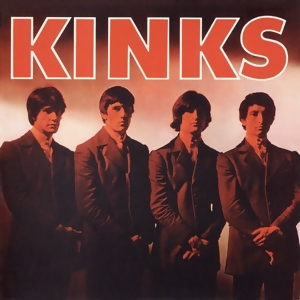
This is too weird — and great! As I left the cafe 'S Nice on Friday after attempting to speak German for an hour, my mind slightly garbled, I noticed The Kinks were playing on the box. Okay, it was "You Really Got Me," but as I walked out onto 8th Avenue, the song continued in my head, and I started to think about the opening guitar riff, how the success of the song depends on that, the rhythm and the right amount of raunchiness in the sound. I made a mental note: another record to introduce to Oliver and Isaac. I'd actually got them Arthur, or The Decline and Fall of the British Empire, a couple of years ago, but thought I had "You Really Got Me" on vinyl. I actually don't, which is fine, as I can hear it clear as day. Then I checked the blog and saw the TC post below.

Monday, May 4, 2009

TC: I'm on an Island


File:KinksTheKinks.jpg


Do not try to adopt me
I am not a pigmy soothed
Boy or baby hitchhiker saint

What is wrong suddenly
Is that I swallow a cold
Blast of air, I mean fright

Spill coffee on my book
And hear the kinks
In the great universe

The warp in the coffin
Phantom men fly out of
Anywhere in this world


TC: "Walked into state..."


White Noise


Walked into state
office building
in flat white
light of cold overcast that,
without sun,
makes all days
seem alike--boat adrift on
ocean sans shore
floats aimless
on endless waves
falling and
again lifting.


White Noise


White Noise, dir. Geoffrey Sax, 2005