Sunday, October 4, 2009

TC: Weight (Keats, Winchester, September 1819)


.


Richland Park143 by JewelHouse10.


After another fine sharp temperate night

It is a warm morning. This is part of the world.

Summer light and dust blow yellow

Filmed clouds into the air. The brown stubble


Fields feel warm, give off a red excited

Glow like irritated raspberry marks

On fair skin, with its soft white weight,

As the doleful choir of gnats still wails,


And the maiden at the manor window shakes

The sheets out, or is it her fine light hair

That flows or is flung from the storybook casement,

That causes me to stop to catch my breath?


Richland Park144 by JewelHouse10.


Richland Park 143: photo by Jewel House 10
Richland Park 144: photo by Jewel House 10

from TC: Junkets on a Sad Planet: Scenes from the Life of John Keats

TC: Melancholy Watch, the Downs (September 1820)


.


A Jetty: Margate: Joseph William Mallord Turner, 1840s (Museum of Fine Arts, Boston)


My melancholy watch, mid-quarter-deck,
Drifting: I follow the play of gulls.
The sun is long gone down, the east darkling,
The ship drifts. In the west, some brightness remains.
Momently there are two flights of gulls moving
One to the east into the dark and one
Out of the west, in the last rays of the sun,
Left and right so entirely dissimilar
That the name gull quite falls from them
As I watch, and the chiaroscuro
Of the evening is torn open, altering
Everything: so that now everything is
Only itself: the gulls, myself closer
In nature than if I still knew their name,
Yet at the same time moving farther out,
Sinking deeper into a fading sky
Which soaks them up like ink accepting water,
Coaxing darkness out of reluctant night,
Bringing on the abolition of that false
Identity which made naming possible.


From TC: Junkets on a Sad Planet: Scenes from the Life of John Keats

Sunday, September 27, 2009

TC: Keats on Shipboard, September 1820


.


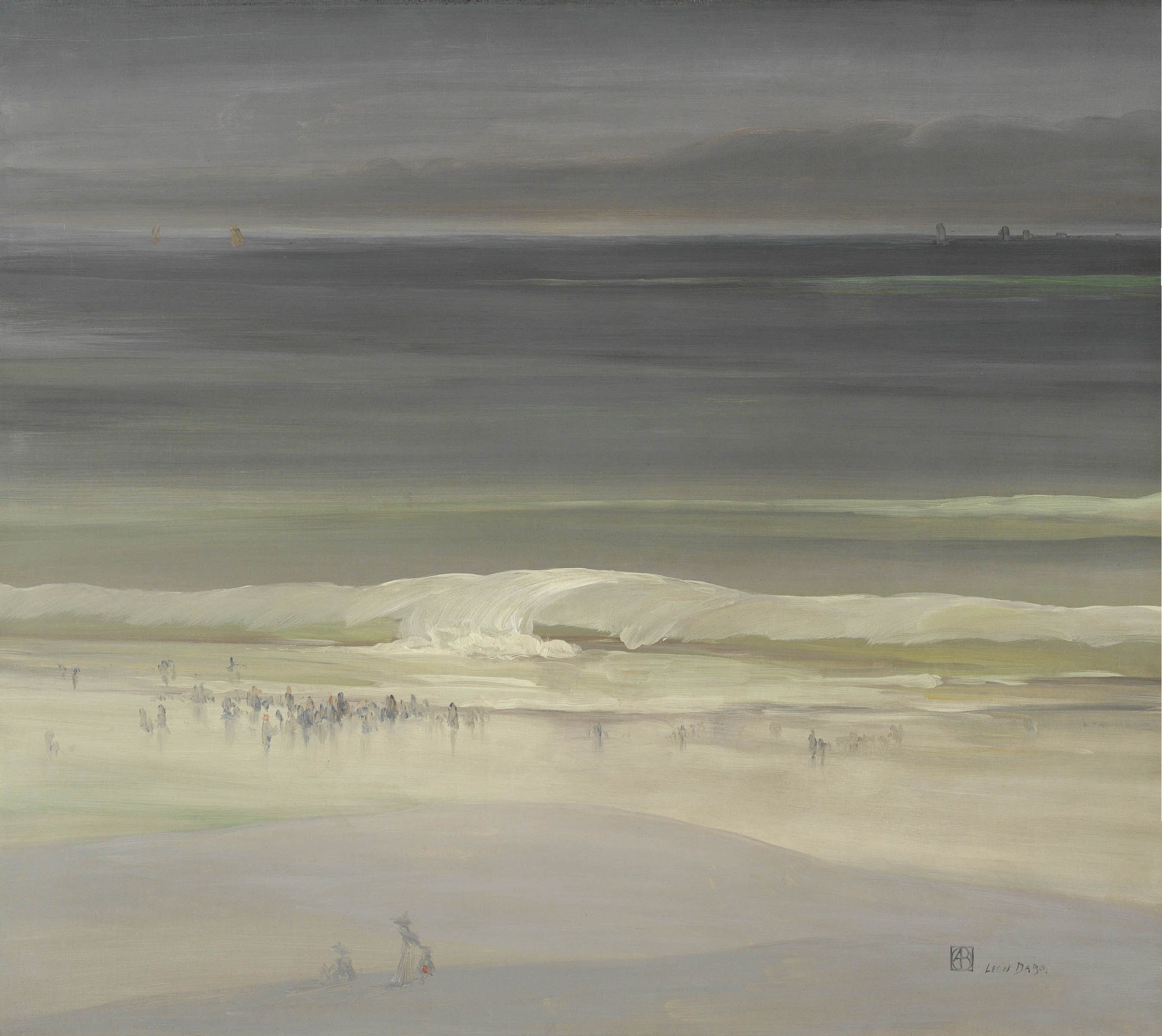
File:Dabo - The Seashore.jpg

The Seashore: Leon Dabo, c. 1900 (Detroit Institute of Arts)


Twilight, a few white clouds about and a few stars blinking

The sweet signals that guide me to this unknowingness,
The waters ebbing and the Horizon a Mystery,
Sea surface calm and strange fish circling below in green

And violet shadows at the turning of the tide,
A sense of a kind of quiet submarine growth
Of darkness in the deeper, outer channels,
With my last English evening coming on.


TC: The Nightingale


.


crop from the original manuscript of 'Ode to a Nightingale' in John Keats's handwriting


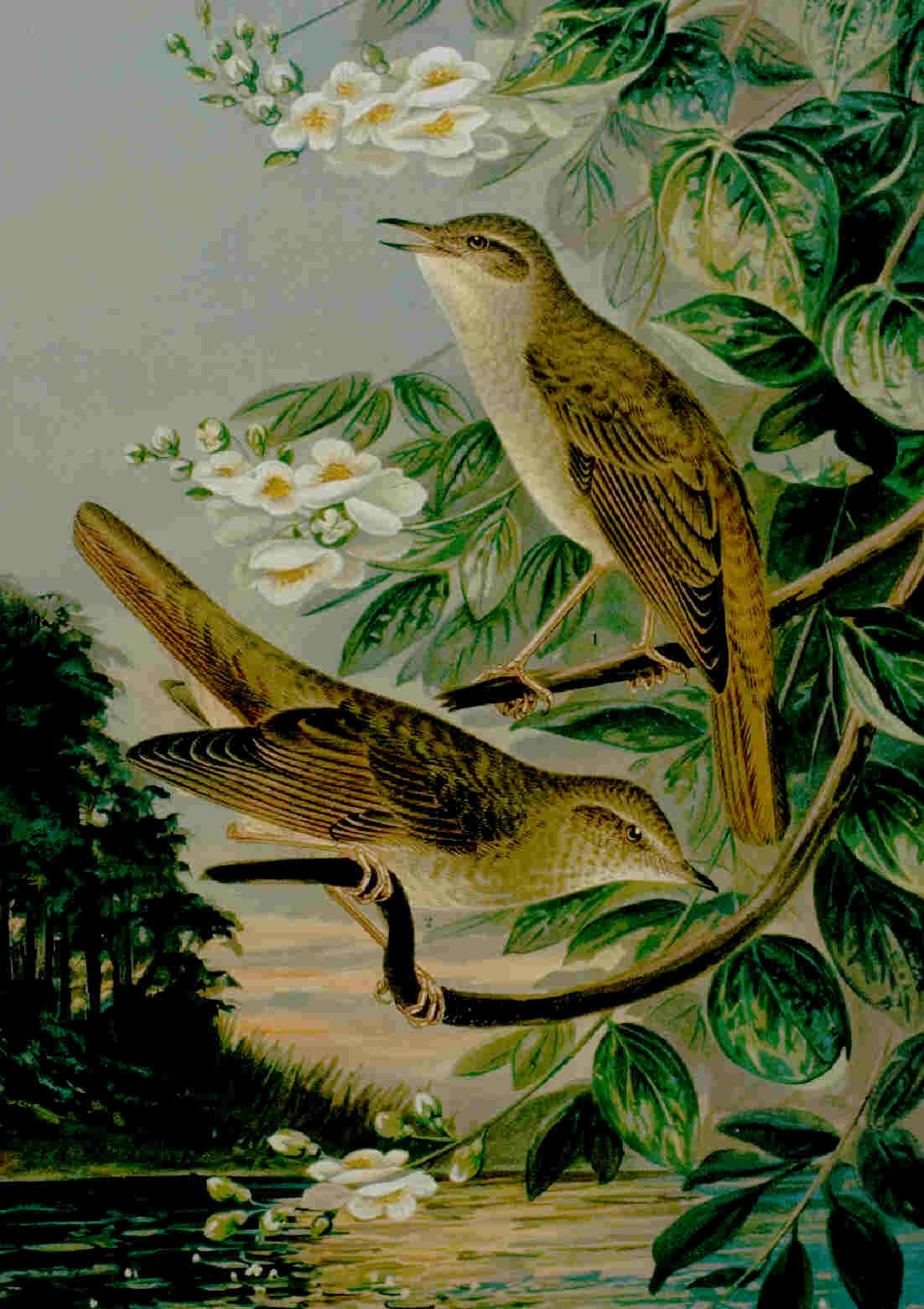
File:Nachtegaal.jpg


It was dark in the covert. From the unseen underwoods came a trill. My friend who had taken me walking in this green Somerset lane paused to listen.

Calm-throated, then rising, a quick buoyant spiral of notes, keen, sweetly piercing. A few seconds and it was over.

"Have you ever heard a nightingale?" my friend asked. This was May 1965 or so.

I hadn't. I was, what, twenty-four, twenty-five?

In the spring of 1819 Keats was twenty-three. He had not far to go.

Coleridge also heard the nightingale in Highgate, early, that forward spring.

The reclusive night-wandering bird, pulled toward the poets' gardens beneath a waxing moon.

Sorrows, mysteries, businesses and sillinesses: human things played out to the backdrop of a deeply earth-tuned melody.

And then, forever, the brevity of the northern summer nights.


http://englishhistory.net/keats/images/odetoanightingale1.jpg


File:Nachtigall1.jpg


Ode to the Nightingale: holograph draft: John Keats, 1819

Nightingale (Luscinia megarhynchos): illustration in Naturgeschichte der Vogel, J. F. Naumann, 1905

Friday, September 18, 2009

TC: Jim Carroll and the Imaginal Particular: "The clock is ticking..."

.


File:Minutensprunguhr.gif


Dear Vincent,
Your provocative post-posting comment on JC: In Memoriam prompts a response I can't quite fit into our comments box. But I do want to respond, it seems a matter worth addressing this week, Jim has all of eternity now but for us the clock is ticking. It is time we attended.

I believe you are right in going out on this limb of thinking Jim into a Romantic tradition of committed fealty to the Imaginal much as was Keats' commitment, the project of belief from which in both cases the practice did follow. As you know this is not a prescribed form of subscription these days and of course the tendency always is to want to fit an artist into his immediate social context. But allowing that Jim fixed first on Rimbaud via Henry Miller and on Frank largely via Ted, we see from the first a division between the larger intention to follow the way of the Imaginal and the more specific location of that tradition in the immediate templates, the imaginal aspects of O'Hara and Berrigan, their way of flinging caution to the winds and buying into a grand dream of art and the poem. Keats was a baiter of bears, Ted wrote, bringing forward the humanness, and that humane quality Ted had was something he surely shared with Keats and passed on to Jim.

But I can't help feeling that as things went along Jim gradually gathered a courage and self-belief, developed largely in that long woodshed period of isolation in the 1970s when his dedication to his craft was intense and concentrated--he was the closeted writer taking care, then, when everybody else was casting around for the lighter pleasures of the moment--that allowed him to move beyond the poets he had first learned from and toward the original idea from Rimbaud of the poet as an alchemist who risks blowing himself up with every nutty experiment, because he can accept no other way than to go all the way.

And here he returns to Keats' worship of the Imaginal as all encompassing, Jim taking that even further out into the bent phantasmagoria of dreams. Anywhere out of this world. Jim went all the way. The important thing I think is that once having made the decision to go out beyond the settled margins, he did not do it in any muzzy or dreamy/blurry way but with the exacting particularity of a fantasy believed and made real. This way he could take in the whole range of psychic experience and deal with it extremely precisely as image. His fables of this psychic life are so utterly specific and vivid, they come to seem like "straight" narratives driven by a perfect consistency of and purchase upon what is true and real of the soul.

I think of The Book of Nods as in this respect the center of his work, in particular pieces like "Guitar Voodoo" and "Just Visiting". These works hold a dark imaginal power that has not yet been reckoned with. Here the recognition of the psychosexual dimensions of the Imaginal are beyond anything of which Keats would have been capable. "I felt my palm rinse her breast. It could have been a radio... What are a woman's breasts? Just so much adornment... they lie like some chalice on an altar waiting for adoration. Like the writing on the scroll... the handles on the urn... the gold that lines the vessel. I wanted the mystery inside. The thunder and the darkest light."

Where do these images come from? The trust in the Imaginal is complete and absolutely particularized, making plain that the movements of Psyche must be treated with utmost precision, a blurring won't do. So this would redefine the Romantic as the Imaginal Particular. Perhaps you will see what I mean from this video of a reading:


"Despite its preference for ambiguities, I tend to believe that the psyche is not against stern precision and exactitude," writes James Hillman. "I do not think that the psyche itself has an inscrutable smile, half-closed eyes and a fake indefiniteness that is but a comforting converse of scientism. The psyche as it appears in therapeutic practice responds to precision, and the images which the psyche produces are precise. To confront them and distill insight from them calls for refined, precise intensity and accuracy of insight. I believe that the psyche's affinity for precision expresses its affinity for spirit."

Taking a lead from Hillman's words I would see Jim now as not simply a prodigy or shooting star soon fading but a writer of serious adult interest who has extended the Romantic tradition into new realms not yet fully understood, perhaps because so many of those who know of him are as if snowblinded by the blizzard of meanings contained or hidden in words like rock star or junkie. The work really remains virgo intacta when it comes to critical examination. But the clock is ticking and its time is coming.


Animation zur Demonstration einer Minutensprunguhr: image by Hk kng, 2009
The Myth of Analysis (excerpt): James Hillman, 1972

"Bright Star"


I went last night to the opening of Poets House's new home on River Terrace in Battery Park City. It is a beautiful space, with a great view, dedicated to poetry. Afterwards, we all marched over to the cinplex to see Jane Campion's "Bright Star," the story of John Keats and Fanny Brawne's relationship, starring Ben Whishaw as Keats and Abbie Cornish as Fanny. It is a remarkable film. As a longtime Campion fan, I had high expectations, and the film lived up to them. Whishaw played Sebastian in the 2008 film version of Brideshead Revisited, in which he did a capable job. He seems much more suited to the role of the Romantic poet — impetuousness and flashes of humor allowing him to enliven the affecting seriousness of Keats's view of poetry. The movie hinges on the performance of Cornish as Fanny, and it is she who, by her performance, creates love in the film, by her impatience with the boorishness of Keats' friend, Charles Armitage Brown, as portrayed in the film by Paul Schneider, and her receptivity to poetry, even having had no previous experience of it. There is substantial recitation of poetry in the film, unlike in some of films of poets, which seem content to "tell the story," not realizing the story is completely contained in the poetry. Even the way in which the poetry is recited is effective, in judiciously chosen fragments, the way ideas are actually exchanged. Whishaw does an excellent job with the poetry, his pauses at the caesuras lingering just a millisecond longer than one would find comfortable, adding a vocal pain to that encompassed in the words.
You know the end of the story, of course, and you know, too, that the film will end with a complete recitation of "Bright Star," the sonnet Keats wrote for Brawne in 1819. I wish that had been handled differently. Cornish, in tears, having learned of Keats' death in Rome, walks to a spot they had shared, reciting the poem, but her disturbed state detracts from her ability to do the complicated poem justice. How much truer to Keats' beliefs it would have been to hear Whishaw reciting the poem from afar, from eternity now, while Cornish, whose performance ably handles a range of emotions, would have been freed to act her grief, without the extra burden of recitation. I recall the excellent recitation of Auden's "Funeral Blues" by John Hannah in Four Weddings and a Funeral. That was given under stress, but not while walking.

Bright star, would I were stedfast as thou art—
Not in long splendour hung aloft the night
And watching, with eternal lids apart,
Like nature's patient, sleepless Eremite,
The moving waters at their priestlike task
Of pure ablution round earth's human shores,
Or gazing on the new soft fallen mask
Of snow upon the mountains and the moors—
No—yet still stedfast, still unchangeable,
Pillow'd upon my fair love's ripening breast,
To feel for ever its soft fall and swell,
Awake for ever in a sweet unrest,
Still, still to hear her tender-taken breath,
And so live ever—or else swoon to death.

Wednesday, September 16, 2009

J.C. In Memoriam


LOVE ROCKETS


Wet leaves along the threshold of the mid-day
and I'm off to rescue the sky from its assassins

jogging and screaming and launching my clean mortars

into the March obscene air. . . the enemy.

I suppose I'd rather be sitting in Samoa now

sipping a quart of Orange Julius and being fanned

by Joey Heatherton in black tights and white glossy lipstick.

but I'm not. I'm here. and I have something to say,

as well as something to take care of.


And that something is probably more important than

you realize. I like the sky (don't you), its warmth, its friendliness,

I'm not going to let all this fucking soot taint that terrific blue.

battle the filthy airs with your mortars and your prayers.


you'll soon be overcome with lovely sensations of the sky.

you'll be thinking of me as this happens.


— Jim Carroll