Sunday, April 19, 2015

T.C.: Robert Creeley: After Lorca


.

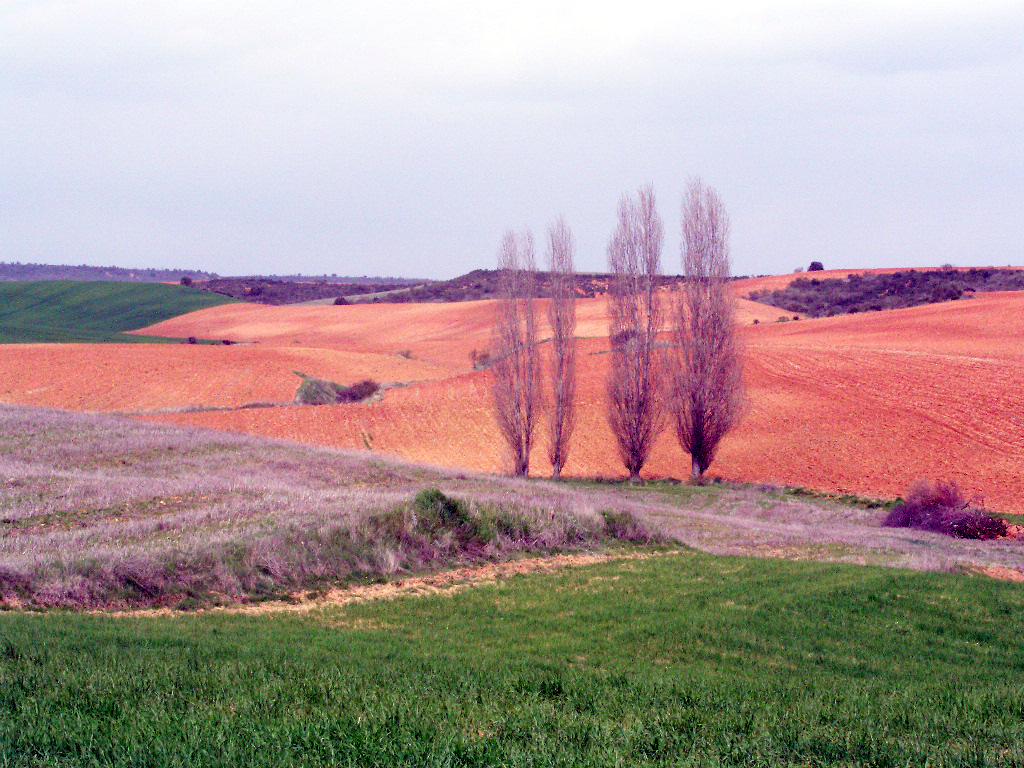
File:Malaguilla Countryside view2.jpg

Malaguilla, Provincia de Guadalajara, Castilla-La Mancha, Spain: photo by Häkan Svensson, 2004


.............................................................for M. Marti


The church is a business, and the rich
are the business men.

............................. When they pull on the bells, the
poor come piling in and when a poor man dies, he has a wooden
cross, and they rush through the ceremony.


But when a rich man dies, they
drag out the Sacrament
and a golden Cross, and go doucement, doucement
to the cemetery.

 
And the poor love it
and think it's crazy.


obert Creeley: After Lorca, 1952, from For Love (1960)


File:OLIVAR12.jpg

Olivar en Alcalá la Real, Jaén, España: photo by Michelangelo-36, 2005

Wednesday, December 17, 2014

TC: Bertolt Brecht: Why Should My Name Be Mentioned?

.


哈尔滨松花江. Despite heavy smog there is a lot of life on the frozen Songhua River, Harbin, China: photo by SinoLaZZeR, 23 November 2013


1
 
Once I thought: in distant times 
When the buildings have collapsed in which I live
And the ships have rotted in which I travelled
My name will still be mentioned
With others.

2
 
Because I praised the useful, which In my day was considered base 
Because I battled against all religions
Because I fought oppression or
For another reason.

3
 
Because I was for people and
Entrusted everything to them, thereby honoring them  
Because I wrote verses and enriched the language 
Because I taught practical behaviour or
For some other reason.
 

4 
Therefore I thought my name would still be
Mentioned; on a stone 
My name would stand; from books
It would get printed into the new books.

5

But today
I accept that it will be forgotten.  
Why 
Should the baker be asked for if there is enough bread?
Why  
Should the snow be praised that has melted
If new snowfalls are impending?
Why  
Should there be a past if 
There is a future?

6
 
Why 
Should my name be mentioned?
 

Bertolt Brecht (1898-1956): Why Should My Name Be Mentioned? (Warum soll mein Name gennant werden?), 1936, translated by Robert Conard in Poems 1913-1956 (1976)


dock at dusk (Hikone, Lake Biwa): photo by Stephen Cairns, 16 September 2013

Monday, December 1, 2014

TC: Allen Ginsberg: A Supermarket in California


http://upload.wikimedia.org/wikipedia/commons/thumb/4/49/Fredmeyer_edit_1.jpg/1024px-Fredmeyer_edit_1.jpg

Supermarket packaged food aisles, the new Fred Meyer on Interstate on Lombard, Portland: photo by Lyzadanger, 2004


What thoughts I have of you tonight Walt Whitman, for I walked down the sidestreets under the trees with a headache self-conscious looking at the full moon.
In my hungry fatigue, and shopping for images, I went into the neon fruit supermarket, dreaming of your enumerations!
What peaches and what penumbras! Whole families shopping at night! Aisles full of husbands! Wives in the avocados, babies in the tomatoes! -- and you, Garcia Lorca, what were you doing down by the watermelons?
 
I saw you, Walt Whitman, childless, lonely old grubber, poking among the meats in the refrigerator and eyeing the grocery boys.
I heard you asking questions of each: Who killed the pork chops? What price bananas? Are you my Angel?
I wandered in and out of the brilliant stacks of cans following you, and followed in my imagination by the store detective.
We strode down the open corridors together in our solitary fancy tasting artichokes, possessing every frozen delicacy, and never passing the cashier.
 
Where are we going, Walt Whitman? The doors close in an hour. Which way does your beard point tonight?
(I touch your book and dream of our odyssey in the supermarket and feel absurd.)
Will we walk all night through solitary streets? The trees add shade to shade, lights out in the houses, we'll both be lonely.
Will we stroll dreaming of the lost America of love past blue automobiles in driveways, home to our silent cottage?
Ah, dear father, graybeard, lonely old courage-teacher, what America did you have when Charon quit poling his ferry and you got out on a smoking bank and stood watching the boat disappear on the black waters of Lethe?
 
Berkeley, 1955


99 Cent: photo by Andreas Gursky, 1999 (Sprüth Magers, Berlin/London)

Allen Ginsberg (1926-1997): A Supermarket in California, from Howl and Other Poems, 1956

Saturday, September 6, 2014

TC: John Wieners: My Mother


.


Washington Street under the El, looking toward Egleston Square: photo by Ernst Halberstadt (1910-1987) for U.S. Environmental Protection Agency, February 1973 (National Archives and Records Administration)


talking to strange men on the subway,

doesn't see me when she gets on,

...........
at Washington Street
but I hide in a booth at the side

.....and watch her worried, strained face --
..the few years she has got left.
.....Until at South Station

....I lean over and say:
..I've been watching you since you got on.
.......She says in an artificial
..........voice: Oh, for Heaven's sake!

....as if heaven cared.

But I love her in the underground
......and her gray coat and hair
sitting there, one man over from me
......talking together between the wire grates of a cage.


John Wieners (1934-2002): My Mother, from The Ages of Youth in Ace of Pentacles (1964)


Elevated railroad structure and blighted area below Washington Street, looking south from the corner of Bartlett, Boston, Massachusetts: photo by Ernst Halberstadt (1910-1987) for U.S. Environmental Protection Agency, February 1973 (National Archives and Records Administration)

Monday, June 9, 2014

TC: James Schuyler: Starlings


.


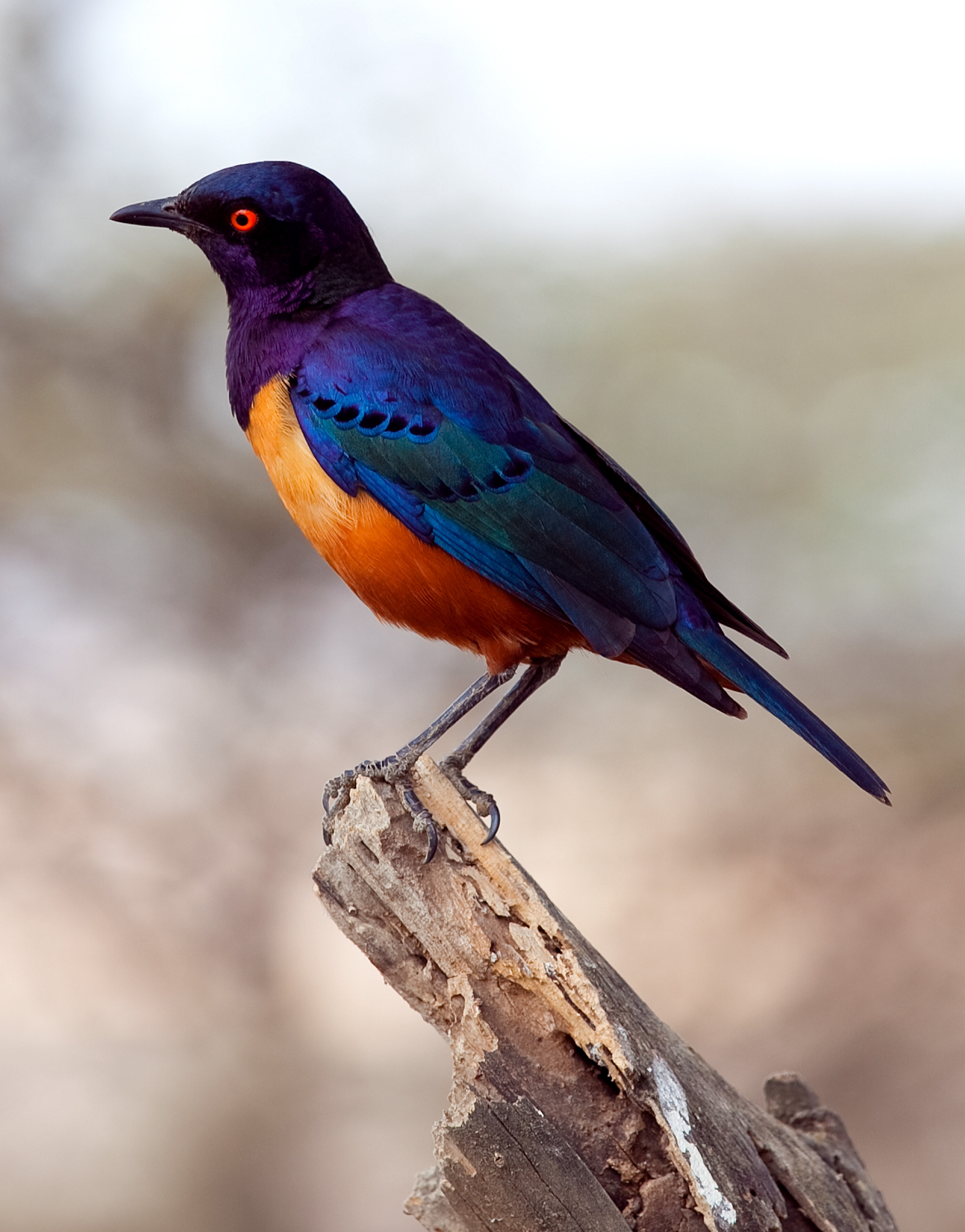
File:Lamprotornis hildebrandti  -Tanzania-8-2c.jpg


Hildebrandt's starling (Lamprotornis hildebrandti), Tanzania: photo by Noel Fearns, 2010


The starlings are singing!

You could call it singing.

At any rate, they are starlings.


Starlings: James Schuyler, from Other Flowers: Uncollected Poems (2010)

Friday, June 6, 2014

TC: Henry Green: Mirroring


.


Young Woman in front of a Mirror (detail): Giovanni Bellini (1426-1516), 1515 (Kunsthistorisches Museum, Vienna)


All of a sudden she was so angry she began to tremble from her toes up.

And Amabel was just drying hers on a towel. The walls were made of looking-glass, and were clouded-over with steam; from them her body was reflected in a faint pink mass. She leaned over and traced her name Amabel in that steam and that pink mass loomed up to meet her in the flesh and looked through bright at her through the letters of her name. She bent down to look at her eyes in the A her name began with, and as she gazed at them steam or her breath dulled her reflection and the blue her eyes were went out or faded.

She rubbed with the palm of her hand, and now she could see all her face. She always thought it more beautiful than anything she had ever seen, and when she looked at herself it was as though the two of them would never meet again, it was to bid farewell; and at the last she always smiled, and she did so this time as it was clouding over, tenderly smiled as you might say good-bye, my darling darling.

...

Her bath-towel was huge and she slowly rubbed every inch of herself with it as though she were polishing. She was gradually changing colour, where she was dry she was going back to white; for instance, her face was dead white but her neck was red. She was polishing her shoulders now and her neck was paling from red into pink and then suddenly it would go white. And all this time she was drying herself she moved her toes as if she was moulding something.

When Alex came to an end she had not properly heard what he had been saying so she said something almost under her breath, or so low that he in his turn should not catch what she had said, but so that it would be enough to tell him she was listening.


As she went over herself with her towel it was plain that she loved her own shape and skin. When she dried her breasts she wiped them with as much care as she would puppies after she had given them their bath, smiling all the time. But her stomach she wiped unsmiling upwards to make it thin. When she came to dry her legs she hissed like grooms do. And as she got herself dry that steam began to go off the mirror walls so that as she got white again more and more of herself began to be reflected.

She stood out as though so much health, such abundance and happiness should never have clothes to hide it. Indeed she looked as though she were alone in the world and she was so good, and so good that she looked mild, which she was not.


Henry Green (1905-1973): from Party Going, 1939


Young Woman in front of a Mirror: Giovanni Bellini (1426-1516), 1515 (Kunsthistorisches Museum, Vienna)

Tuesday, May 6, 2014

TC: Carl Spitzweg: Back to Books


.

[Reading+the+Breviary,+The+Evening.jpg]

Reading the Breviary, Evening
: Carl Spitzweg (1808-1885), 1839, oil on canvas (Musée du Louvre, Paris)


Dear Margie, hello It is 5.15 a.m.
dear Berrigan He died
Back to books.


Ted Berrigan, Sonnet II (excerpt), from The Sonnets, 1964

O bliss of the collector, bliss of the man of leisure! Of no one has less been expected, and no one has had a greater sense of well-being than the man who has been able to carry on his disreputable existence in the mask of Spitzweg's "Bookworm." For inside him there are spirits, or at least little genii, which have seen to it that for a collector -- and I mean a real collector, a collector as he ought to be -- ownership is the most intimate relationship that one can have to objects. Not that they come alive in him; it is he who lives in them. So I have erected one of his dwellings, with books as the building stones, before you, and now he is going to disappear inside, as is only fitting.

Walter Benjamin: from Unpacking My Library: A Talk about Book Collecting, 1931

Even the dream of a "better humanity" in which our children would "have a better life" is only a sentimental fantasy reminiscent of Spitzweg when it is not, at bottom, a dream of a better nature in which they would live.

Walter Benjamin: from Das Passagen-Werk, 1982
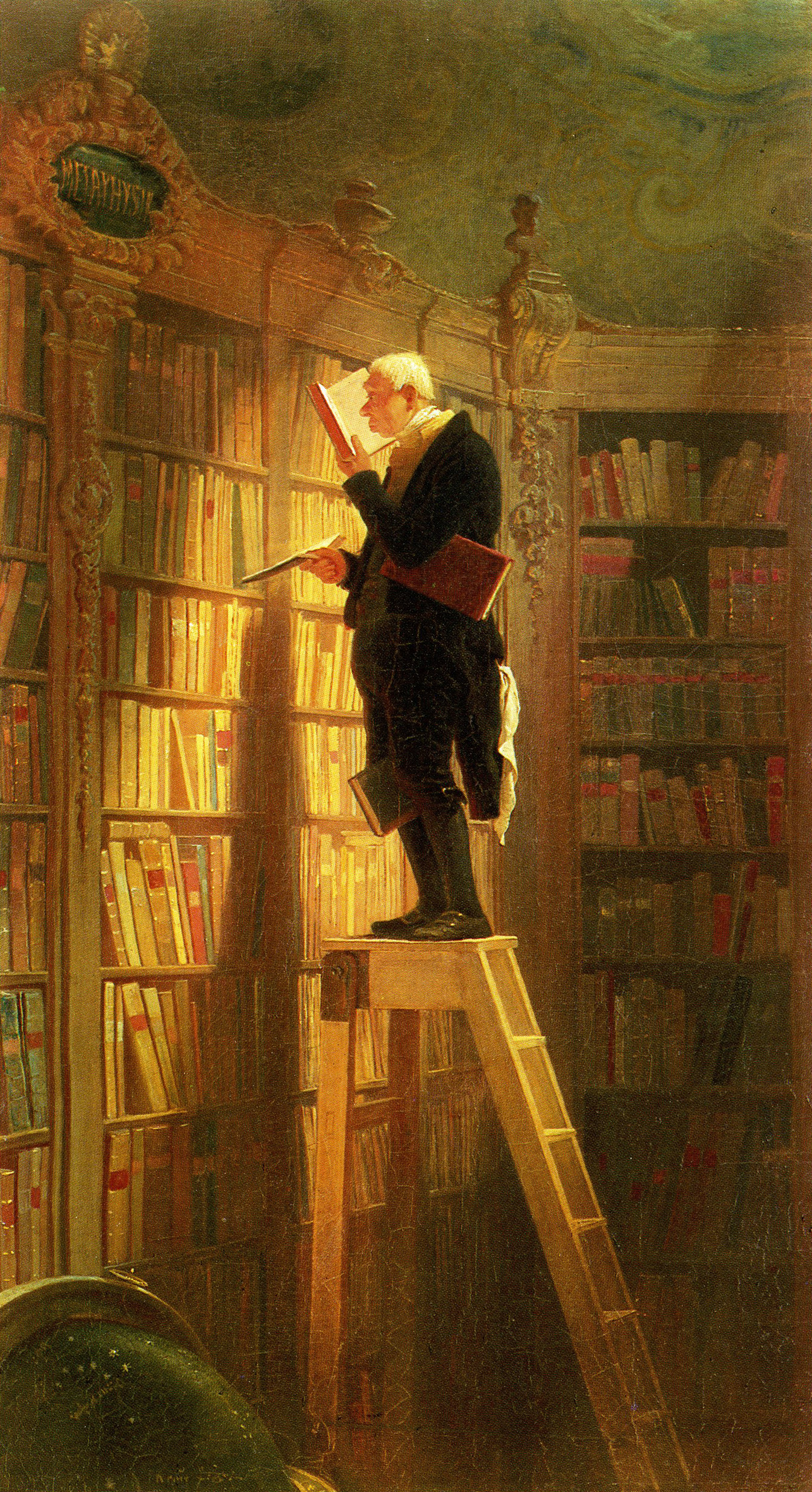


The Bookworm (Der Bücherwurm): Carl Spitzweg, c. 1850, oil on canvas;
image by Tagada Victoria, 10 October 2008 (Sammlung Georg Schäfer, Schweinfurt)
 

File:Carl Spitzweg - Der arme Poet (Neue Pinakothek).jpg

The Poor Poet (der Arme Poet): Carl Spitzweg, 1839, oil on canvas, 36.2 x 44.6 cm; image by Cybershot 800i, 20 June 2011 (Neue Pinakothek, Munich)
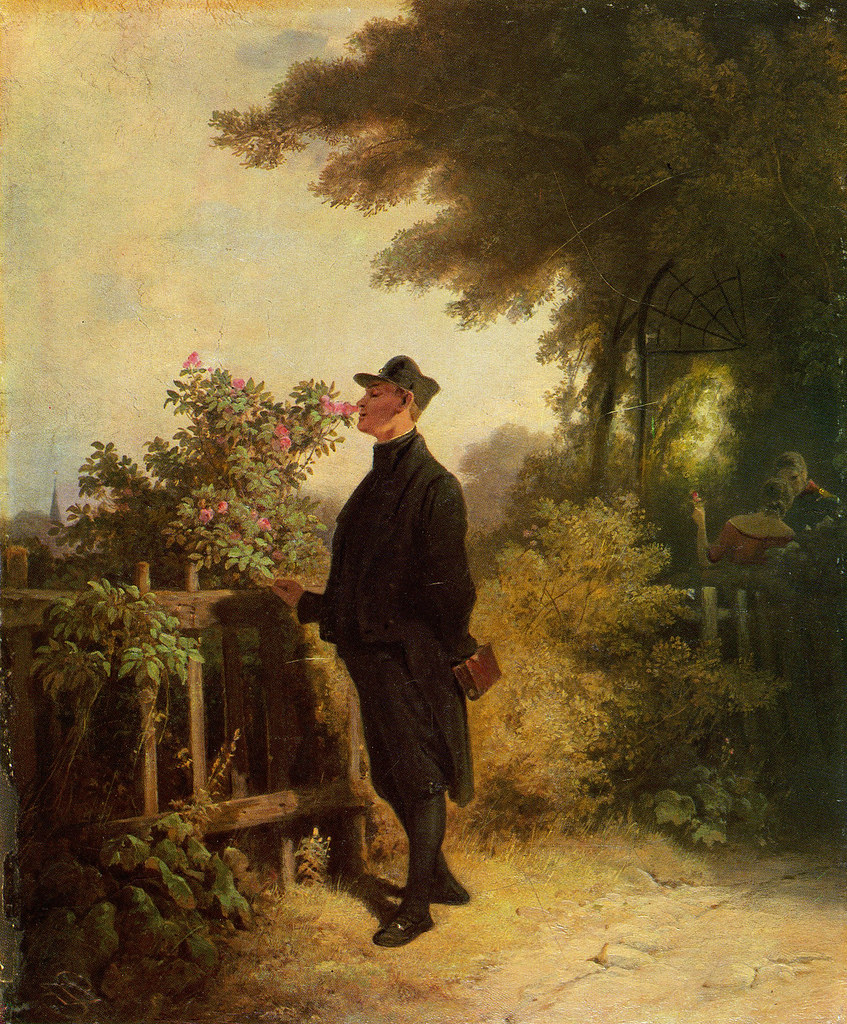


Perfume of a Rose, Memory (Rosenduft, Erinnerung): Carl Spitzweg, oil on canvas, 1849


The Professor (Zeitungsleser im Hausgarten): Carl Spitzweg, c. 1860, oil on panel, 21.3 x 15.5 cm (Museum Pfalzgalerie Kaiserslautern)
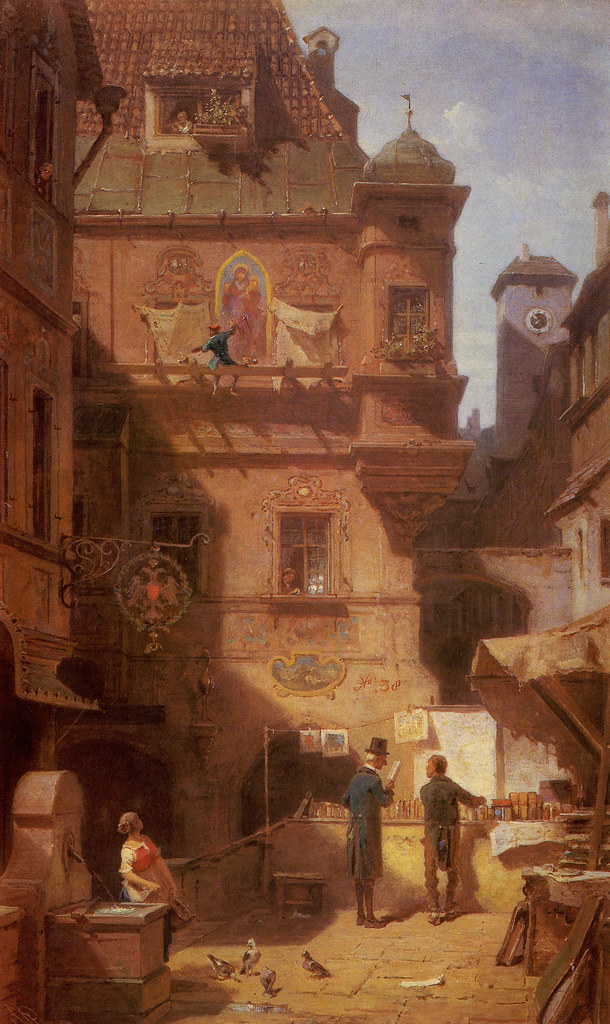


Art and Knowledge (Kunst und Wissenschaft): Carl Spitzweg, 1880, oil on canvas

File:Carl Spitzweg - Der verbotene Weg.jpg
 
The Forbidden Path (Der verbotene Weg): Carl Spitzweg, c. 1840, oil on canvas, 38.3 x 31.2 cm; image by LeastCommonAncestor, 17 November 2010 (Sammlung Georg Schäfer, Schweinfurt)


File:Der Hagestolz (Carl Spitzweg).jpg

The Bachelor (Der Hagestolz): Carl Spitzweg, n.d., oil on panel, 38.2 x 46 cm (Museum der Bildenden Künste, Leipzig)


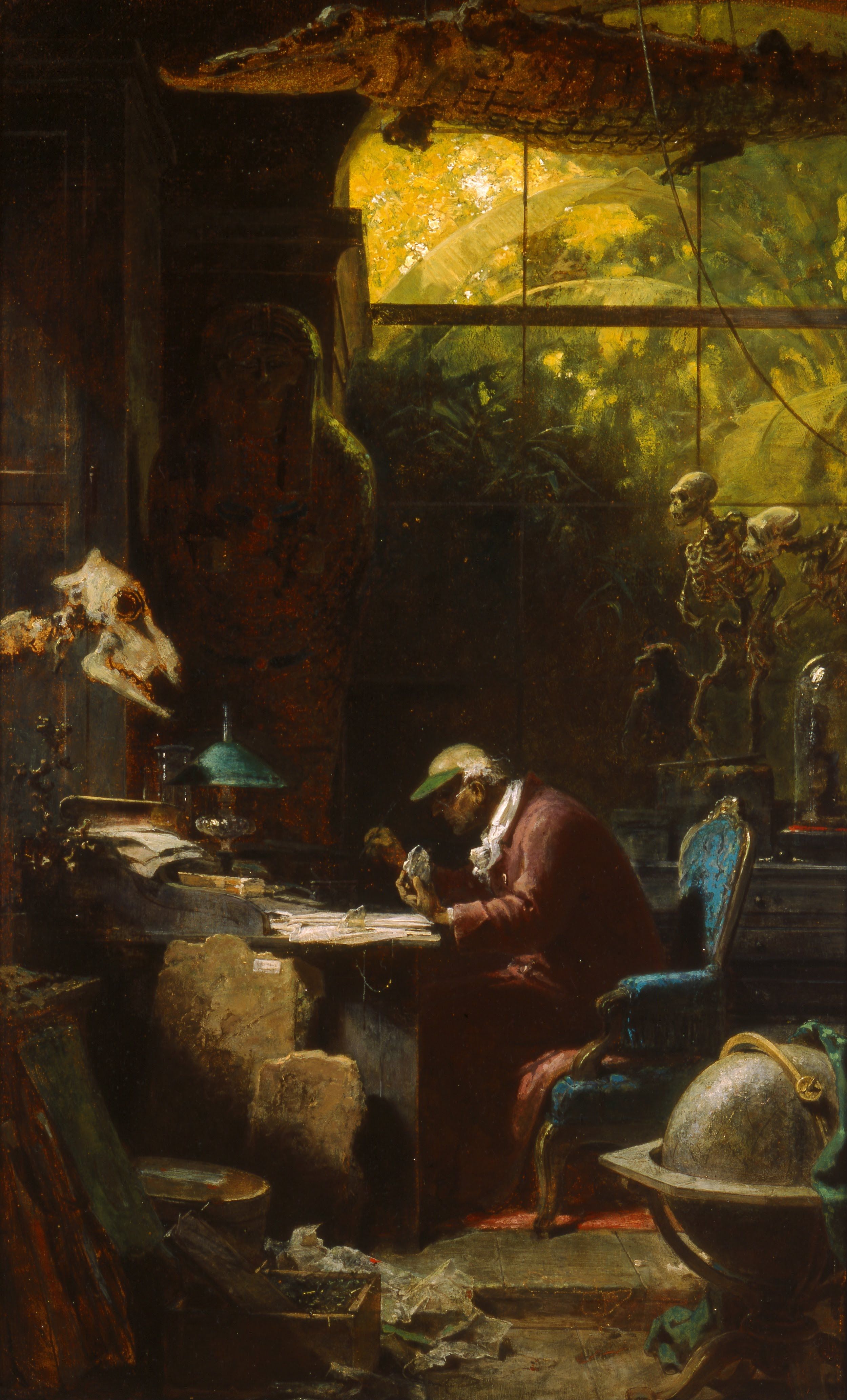
File:Carl Spitzweg - Ein Gelehrter der Naturwissenschaften.jpg

Scholar of Natural Sciences: Carl Spitzweg, c. 1875-1880, oil on paper mounted on canvas, 57.15 x 31.93 cm (Milwaukee Art Museum)

http://www.museumsyndicate.com/images/1/6097.jpg

The Cactus Lover: Carl Spitzweg, c. 1850, oil  on canvas (Sammlung Georg Schäfer, Schweinfurt)


http://www.museumsyndicate.com/images/1/6068.jpg

A Visit: Carl Spitzweg, c. 1850, oil on cardboard, 22.1 x 26.7 cm (Sammlung Georg Schäfer, Schweinfurt)


File:Ein Besuch 2 (Carl Spitzweg).jpg

A Visit (Ein Besuch) (detail): Carl Spitzweg, c. 1850; image by Immanuel Giel, 3 September 2007
(Sammlung Georg Schäfer, Schweinfurt) 


File:Ein Besuch 1 (Carl Spitzweg).jpg


A Visit (Ein Besuch) (detail): Carl Spitzweg, c. 1850; image by Immanuel Giel, 3 September 2007 (Sammlung Georg Schäfer, Schweinfurt)
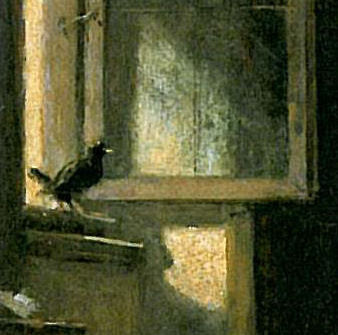
 

File:Der Rabe (Carl Spitzweg).jpg


The Raven: Carl Spitzweg, c. 1840, oil on canvas (Baxerische Staatsgemäldesammlung, Munich)
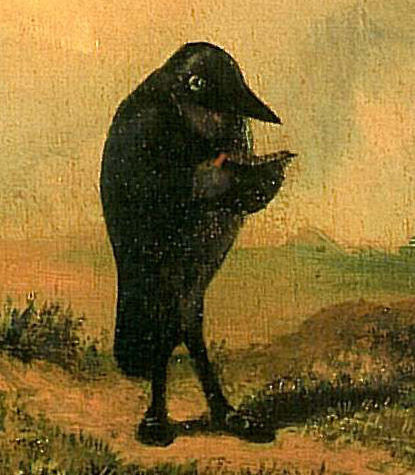

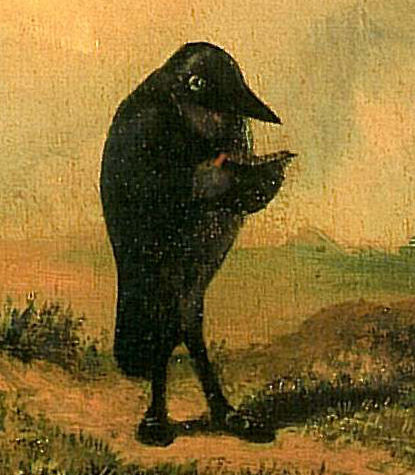
File:Der Rabe (Carl Spitzweg, Ausschnitt).jpg


The Raven (detail): Carl Spitzweg, c. 1840 (Baxerische Staatsgemäldesammlung, Munich)